


The most practical belief system for a large-scale society in the long run is one that is firmly anchored in factual reality.
Universe Spirit Blogs
-
Four ways your faith can help you survive and thrive the coming global warming catastrophes.
We have done many posts on the global warming emergency and how bad it is. We thought it's time to post some realistic yet positive perspectives on this escalating crisis that we all face.
Please enjoy these new entries.

There are many benefits for people of faith as we endure the unavoidable coming global warming catastrophes. Your spiritual faith will help you to endure the hardships and sacrifice as the global warming process escalates until it is finally resolved. There is also a large personal spiritual growth benefit in the evolutionary process itself whenever you overcome significant obstacles and challenges. You grow in both character and in spirit.
Additionally, helping to re-stabilize our climate will give you a powerful opportunity to live your deepest faith in relation to what many refer to as the Great Mystery of Ultimate Reality (God, Buddha, Allah, etc.) You can also demonstrate that ending global warming and being a good steward for the Earth is fully compatible with your best understanding of the Great Mystery and its intentions to sustain life on the planet (as believed in many faiths). As this happens, you will be demonstrating the power and influence of your faith and the world's religions.
The best and biggest silver lining here is that when most individuals of faith and most of the great religious groups of this world collectively demand we do what is necessary to slow and less escalating global warming, an unimaginably great moral leverage will be in place to help ensure we are eventually successful.
Your strong personal faith shared with others will also help demonstrate that humanity is completely capable of lessening, slowing, and eventually resolving the global warming challenge if:
- we clearly understand the global warming emergency is currently and what caused it. (Click here for a temporarily free copy of a new ebook on the global warming emergency that will provide the latest research.)
- we are realistic about what is effective and what is not in the time we have left,
- we do the “first-things-first” on critical path actions,
- we cooperate together as a unified and coordinated force.
Together, faith and spirit communities can help extend the existence, stability, and quality of life for the present generation, as well as for future generations.
“A thing is right when it tends to preserve the integrity, stability, and beauty of the biotic community. It is wrong when it tends otherwise.”
— Aldo Leopold, American author, ecologist, and environmentalist
-
Why the Movie Downsizing Should be Seen by Everyone Who Cares About the Environment?

Alexander Payne the writer and producer of Downsizing, as well as Matt Damon and the other stars, deserve the highest environmental honors. It is obvious they took a lot of professional risks in making this clever film about the dangers of global warming.
Every environmentalist and sustainability advocate should see this film! What may be the single greatest truth of this film is that it has cleverly brought one of the 11 key tipping points of global warming to the forefront of the world's consciousness. That tipping point is methane release from the melting permafrost and tundra.
While this is not the most dangerous of the 11 key global warming tipping points, it is among the most likely that will throw humanity into an extinction cycle within the next 30 to 50 years. (See the new book Climageddon at Amazon for more details about the real dangers of global warming tipping points.)
In this movie, there are many clever plays on the downsizing of human beings to downsize their consumption and overconsumption or resource overshoot. While it was not an initial box office hit, we believe that over the years this movie will do very well in the streaming services and at other video rental outlets. Downsizing was chosen by the National Board of Review as one of the top ten films of 2017, while Hong Chau a co-star earned a nomination for Best Supporting Actress at the 75th Golden Globe Awards.
For those of you who want more information on this movie the following is from its Wikipedia page and, it does not give away a very clever ending and telling of the methane tipping point surprise.
Downsizing is a 2017 American science fiction comedy-drama film directed by Alexander Payne, written by Payne and Jim Taylor and starring Matt Damon, Christoph Waltz, Hong Chau, and Kristen Wiig. It tells the story of a couple who decide to undertake a newly-invented procedure to shrink their bodies so they can start a new life in an experimental community. When the wife refuses the procedure at the last minute, the husband has to reassess his life and choices after befriending an impoverished activist.
Here is the movie trailer.
-
How to really know If we are making any progress in reducing global warming.
Would you be surprised to know that we are not making any real progress on reducing the worst current and future consequences of global warming? Here is the proof.
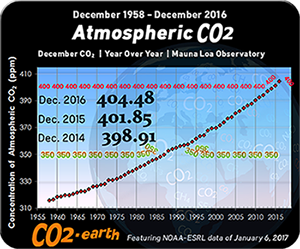
Atmospheric carbon from fossil fuel burning is the main human-caused factor in the escalating global warming emergency we are experiencing now. The current level of carbon in our atmosphere is tracked using what is called the Keeling curve. The Keeling curve measures atmospheric carbon in parts per million (ppm).
Each year, many measurements are taken at Mauna Loa, Hawaii to determine the parts per million (ppm) of carbon in the atmosphere at that time. At the beginning of the Industrial Revolution around 1880, before we began fossil fuel burning, our atmospheric carbon level was at about 270 ppm.
Here is the current Keeling curve graph. Today we are at about carbon 408 ppm.
Keeling Curve Monthly CO2 graph, via Show.earthAs you can see, we are not reducing global warming causing carbon in spite of all that you have heard in the media about what both individuals and nations are doing. This exponentially rising carbon is also very bad for limiting the 20 worst consequences of global warming.
If the total carbon ppm level in our atmosphere is not going down or carbon’s average ppm level per year is not falling or at the very minimum slowing its steep level of increase (as shown above,) we are in fact not making any significant progress on resolving the escalating global warming emergency.
As you can instantly see in the above graph, not only are we not making any global warming reduction progress, worse yet, we are going in the wrong direction faster and faster!
This carbon ppm global warming measurement system is so accurate that it bears repeating. No matter what you are being told about global warming reduction progress by the media, governments or climate “authorities,” total atmospheric carbon as well as carbon’s average ppm level increase per year is the most dependable measurement of our real progress and the greatest predictor for current and future global warming consequences.
In Summary
There are two key ways you will always be able to tell if we are making honest progress in reducing global warming:When you start seeing the above Keeling graph levels dropping from the current carbon ppm level (approximately 408 ppm) back to a reasonably safe carbon 350-325 ppm.
When we see our average annual increase in carbon ppm levels (currently at about 3+ ppm per year) begin dropping significantly.
As you can see we are in deep trouble and we are not making progress In reducing global warming in spite of 30+ years of warnings about what is coming.
If you are interested in what you can do to effectively help reduce global warming, click here and begin the actions steps of the new Job One Plan.
This document provided by the research and editorial team at Job One for Humanity. It is derived from the new book Climageddon, The Global Warming Emergency and How to Survive it.
Please share this blog post on other global warming and climate change related blogs and anywhere else appropriate on the Internet.
-
How to really know If we are making any progress in reducing global warming.
Would you be surprised to know that we are not making any real progress on reducing the worst current and future consequences of global warming? Here is the proof.
Atmospheric carbon from fossil fuel burning is the main human-caused factor in the escalating global warming emergency we are experiencing now. The current level of carbon in our atmosphere is tracked using what is called the Keeling curve. The Keeling curve measures atmospheric carbon in parts per million (ppm).
Each year, many measurements are taken at Mauna Loa, Hawaii to determine the parts per million (ppm) of carbon in the atmosphere at that time. At the beginning of the Industrial Revolution around 1880, before we began fossil fuel burning, our atmospheric carbon level was at about 270 ppm.
Here is the current Keeling curve graph. Today we are at about carbon 408 ppm.
Keeling Curve Monthly CO2 graph, via Show.earthAs you can see, we are not reducing global warming causing carbon in spite of all that you have heard in the media about what both individuals and nations are doing. This exponentially rising carbon is also very bad for limiting the 20 worst consequences of global warming.
If the total carbon ppm level in our atmosphere is not going down or carbon’s average ppm level per year is not falling or at the very minimum slowing its steep level of increase (as shown above,) we are in fact not making any significant progress on resolving the escalating global warming emergency.
As you can instantly see in the above graph, not only are we not making any global warming reduction progress, worse yet, we are going in the wrong direction faster and faster!
This carbon ppm global warming measurement system is so accurate that it bears repeating. No matter what you are being told about global warming reduction progress by the media, governments or climate “authorities,” total atmospheric carbon as well as carbon’s average ppm level increase per year is the most dependable measurement of our real progress and the greatest predictor for current and future global warming consequences.
In Summary
There are two key ways you will always be able to tell if we are making honest progress in reducing global warming:When you start seeing the above Keeling graph levels dropping from the current carbon ppm level (approximately 408 ppm) back to a reasonably safe carbon 350-325 ppm.
When we see our average annual increase in carbon ppm levels (currently at about 3+ ppm per year) begin dropping significantly.
As you can see we are in deep trouble and we are not making progress In reducing global warming in spite of 30+ years of warnings about what is coming.
If you are interested in what you can do to effectively help reduce global warming, click here and begin the actions steps of the new Job One Plan.
This document provided by the research and editorial team at Job One for Humanity. It is derived from the new book Climageddon, The Global Warming Emergency and How to Survive it.
Please share this blog post on other global warming and climate change related blogs and anywhere else appropriate on the Internet.
-
Just Ahead of the Release of Pope's New Encyclical on Global Warming and the Environment the Religion 2.0 Movement Releases its New Positions on Global Warming and the Environment
It is great that the Catholic Church through its new Pope Francis is releasing a detailed new encyclical on global warming and preserving the environment. Hopefully the governing bodies of all the other major religions of the world will follow soon with their own similar statements about the morality of polluting and destroying our planet's life-critical environment.
It is also great that the Pope Francis says "if we destroy creation it will destroy us" and that we have a definite moral duty to preserve our planet for future generations. Since its inception of the Religion 2.0 movement it has held similar positions in clear position papers.
The two most important Religion 2.0 position papers on the environment and global warming are:
a.) the Sustainable Prosperity position paper, and
b.) the Job One For Humanity Climate Re-Stabilization Plan.
We invite you to read these two Religion 2.0 movement position papers on global warming and the environment and compare their detailed contents on what is happening now and what must be done to what the Pope Francis will be releasing shortly in his new papal encyclical.
For more information about the Religion 2.0 movement, click here.
New Jordan 11 Mens Sneakers Sale,Official New Jordan 11 Womens Online
-
All about Earth Day 2015. What everyone needs to know about its history and this year's events April 18th!
There are going to be exciting Earth day events all over the world this Saturday April 18th. Look at who's going to be attending and playing at the mega-event in Washington DC.

The History of Earth Day

Each year, Earth Day — April 22 — marks the anniversary of what many consider the birth of the modern environmental movement in 1970.
The height of hippie and flower-child culture in the United States, 1970 brought the death of Jimi Hendrix, the last Beatles album, and Simon & Garfunkel’s “Bridge Over Troubled Water”. Protest was the order of the day, but saving the planet was not the cause. War raged in Vietnam, and students nationwide increasingly opposed it.
At the time, Americans were slurping leaded gas through massive V8 sedans. Industry belched out smoke and sludge with little fear of legal consequences or bad press. Air pollution was commonly accepted as the smell of prosperity. “Environment” was a word that appeared more often in spelling bees than on the evening news. Although mainstream America remained oblivious to environmental concerns, the stage had been set for change by the publication of Rachel Carson’s New York Times bestseller Silent Spring in 1962. The book represented a watershed moment for the modern environmental movement, selling more than 500,000 copies in 24 countries and, up until that moment, more than any other person, Ms. Carson raised public awareness and concern for living organisms, the environment and public health.
Earth Day 1970 capitalized on the emerging consciousness, channeling the energy of the anti-war protest movement and putting environmental concerns front and center.
The idea came to Earth Day founder Gaylord Nelson, then a U.S. Senator from Wisconsin, after witnessing the ravages of the 1969 massive oil spill in Santa Barbara, California. Inspired by the student anti-war movement, he realized that if he could infuse that energy with an emerging public consciousness about air and water pollution, it would force environmental protection onto the national political agenda. Senator Nelson announced the idea for a “national teach-in on the environment” to the national media; persuaded Pete McCloskey, a conservation-minded Republican Congressman, to serve as his co-chair; and recruited Denis Hayes as national coordinator. Hayes built a national staff of 85 to promote events across the land.
As a result, on the 22nd of April, 20 million Americans took to the streets, parks, and auditoriums to demonstrate for a healthy, sustainable environment in massive coast-to-coast rallies. Thousands of colleges and universities organized protests against the deterioration of the environment. Groups that had been fighting against oil spills, polluting factories and power plants, raw sewage, toxic dumps, pesticides, freeways, the loss of wilderness, and the extinction of wildlife suddenly realized they shared common values.
Earth Day 1970 achieved a rare political alignment, enlisting support from Republicans and Democrats, rich and poor, city slickers and farmers, tycoons and labor leaders. The first Earth Day led to the creation of the United States Environmental Protection Agency and the passage of the Clean Air, Clean Water, and Endangered Species Acts. “It was a gamble,” Gaylord recalled, “but it worked.”
As 1990 approached, a group of environmental leaders asked Denis Hayes to organize another big campaign. This time, Earth Day went global, mobilizing 200 million people in 141 countries and lifting environmental issues onto the world stage. Earth Day 1990 gave a huge boost to recycling efforts worldwide and helped pave the way for the 1992 United Nations Earth Summit in Rio de Janeiro. It also prompted President Bill Clinton to award Senator Nelson the Presidential Medal of Freedom (1995) — the highest honor given to civilians in the United States — for his role as Earth Day founder.
As the millennium approached, Hayes agreed to spearhead another campaign, this time focused on global warming and a push for clean energy. With 5,000 environmental groups in a record 184 countries reaching out to hundreds of millions of people, Earth Day 2000 combined the big-picture feistiness of the first Earth Day with the international grassroots activism of Earth Day 1990. It used the Internet to organize activists, but also featured a talking drum chain that traveled from village to village in Gabon, Africa, and hundreds of thousands of people gathered on the National Mall in Washington, DC. Earth Day 2000 sent world leaders the loud and clear message that citizens around the world wanted quick and decisive action on clean energy.
Much like 1970, Earth Day 2010 came at a time of great challenge for the environmental community. Climate change deniers, well-funded oil lobbyists, reticent politicians, a disinterested public, and a divided environmental community all contributed to a strong narrative that overshadowed the cause of progress and change. In spite of the challenge, for its 40th anniversary, Earth Day Network reestablished Earth Day as a powerful focal point around which people could demonstrate their commitment. Earth Day Network brought 225,000 people to the National Mall for a Climate Rally, amassed 40 million environmental service actions toward its 2012 goal of A Billion Acts of Green®, launched an international, 1-million tree planting initiative with Avatar director James Cameron and tripled its online base to over 900,000 community members.
The fight for a clean environment continues in a climate of increasing urgency, as the ravages of climate change become more manifest every day. We invite you to be a part of Earth Day and help write many more victories and successes into our history. Discover energy you didn’t even know you had. Feel it rumble through the grassroots under your feet and the technology at your fingertips. Channel it into building a clean, healthy, diverse world for generations to come...
We also invite you to review two empowering programs on our website that will effectively help achieve the goals of Earth day.
Click here for how to create a Sustainable Prosperity for all!
Click here to learn about the Job One for Humanity Climate Restabilization Plan.
For more information on Earth day events go to http://www.earthday.org/2015
-
New Catholic Church Papal Encyclical to Urge Global Action on Climate Change
In a move sure to upset climate change deniers around the world, Pope Francis plans to issue a papal encyclical this summer that will urge international action to protect the world from global warming.
The papal letter to Catholic bishops urging them to focus on the environment is bound to have a strong impact, being transmitted to 5,000 bishops, 400,000 priests and 1.2 billion Catholic Church members, translated into hundreds of languages and broadcast worldwide, Market Watch notes.
Stressing the effects of climate change on the poor, Pope Francis already has voiced several clues about the content of the encyclical, saying, "I don't know if [human activity] is the only cause, but mostly, in great part, it is man who has slapped nature in the face. We have in a sense taken over nature," NBC News reports.
His concern for the environment also is expected to make up a major part of the Pope's addresses to a joint session of Congress in September, the U.N. General Assembly in New York, and his December speech at the U.N. Climate Conference in Paris, Market Watch notes.
Cardinal Peter Turkson, who helped draft the encyclical, said in a recent speech that the Pope was "compelled by the scientific evidence for climate change" while also taking into consideration scientific disagreement over its causes, NBC reported.
"What is not contested is that our planet is getting warmer," Turkson said. "The threats that arise from global inequality and the destruction of the environment are interrelated, and they are the greatest threats we face as a human family today."
Friday, 10 Apr 2015 06:00 PM
By John Blosser
To learn what global warming caused climate destabilization is, click here.
To learn why the term climate destabilization is replacing climate change and global warming, click here.
To learn what you can do to reverse global warming and climate destabilization, click here.
-
Must See New "Merchants of Doubt" Movie Exposes the Hidden and Highly Profitable Global Warming and Climate Change Denyer Industry.

In "Merchants of Doubt,” the subject is global warming. Or, more precisely, the business of denying the existence of climate change. Even the term “climate change” is a product of spin, coined by conservative politicians who felt it sounded less threatening than “global warming."
After pulling the curtain back on the evils of Monsanto and GMOs in his acclaimed “Food Inc.,” director Robert Kenner is back with more dirty little secrets about American industry in “Merchants of Doubt.” The subject is global warming. Or, more precisely, the business of denying the existence of climate change. Even the term “climate change” is a product of spin, coined by conservative politicians who felt it sounded less threatening than “global warming.”
Gullible Americans bought it, too. And in Kenner’s eyes we’re as culpable in our world’s demise as self-serving politicians and greedy corporations. Inspired by a muckraking book by Naomi Oreskes and Erik M. Conway, Kenner has an agenda, and he goes for the jugular – over and over. He presents his array of facts, figures and talking heads in a manner that is as informative as it is terrifying. The scariest part isn’t that a warm up could wipe out coastal cities like Boston. What’s alarming is that we are running out of time to stop it. Kenner makes a compelling case that climate change could be slowed from the get-go if big-business hadn’t made like master magicians and twisted scientific fact into subjective doubt. Kenner contends corporations like Exxon Mobil and Phillip Morris “fool people for benefit.” And, he shows how they hoodwink us with slick PR campaigns and highly charismatic, silver-tongued pundits-for-hire, like lobbyist – and Rush Limbaugh pal – Marc Morano, who present themselves in the media as scientific authorities. Laughs Morano: “I’m not a scientist, but I play one on TV, occasionally.”
Kenner frames his film around the strategy of big tobacco, which introduced doubt to combat facts. Now every potentially harmful industry, from flame retardants to GMOs to fossil fuels, follows the blueprint of hiring savvy public relations specialists to create uncertainty by persuading the public that “more data is needed.”
In insightful interviews with professional illusionist Jamy Ian Swiss, Kenner cleverly shows how the public is being taken for a ride. It isn’t Swiss levitating a woman that’s the most amazing trick of all time, it’s the black magic orchestrated by climate-change skeptics.
One of Kenner’s voices is Harvard science historian Oreskes, who connects the dots on the marriage of science and politics. Also heard from are conservative South Carolina congressman Bob Inglis, who was voted out of office because he took a stand against climate skeptics, and Michael Shermer, the publisher of Skeptic magazine.
By the time the ending arrives, you’re fuming mad. That changes to sadness, because Kenner offers little hope for righting the wrong of our own stupidity...
By Dana Barbuto
The Patriot Ledger MERCHANTS OF DOUBT (PG-13 for brief strong language.) Documentary directed by Robert Kenner. Cast: Robert Hansen, Frederick Singer, Naomi Oreskes, Jamy Ian Swiss, Bob Inglis, Marc Morano. Grade: B+ Posted Mar. 20, 2015To learn more truth about climate change and about how we work together to fix global warming click hjere for the Job One for Humanity Sustainable Prosperity and Climate Restabilization Plan. -
RISK OF AMERICAN 'MEGADROUGHTS' FOR DECADES, NASA WARNS...
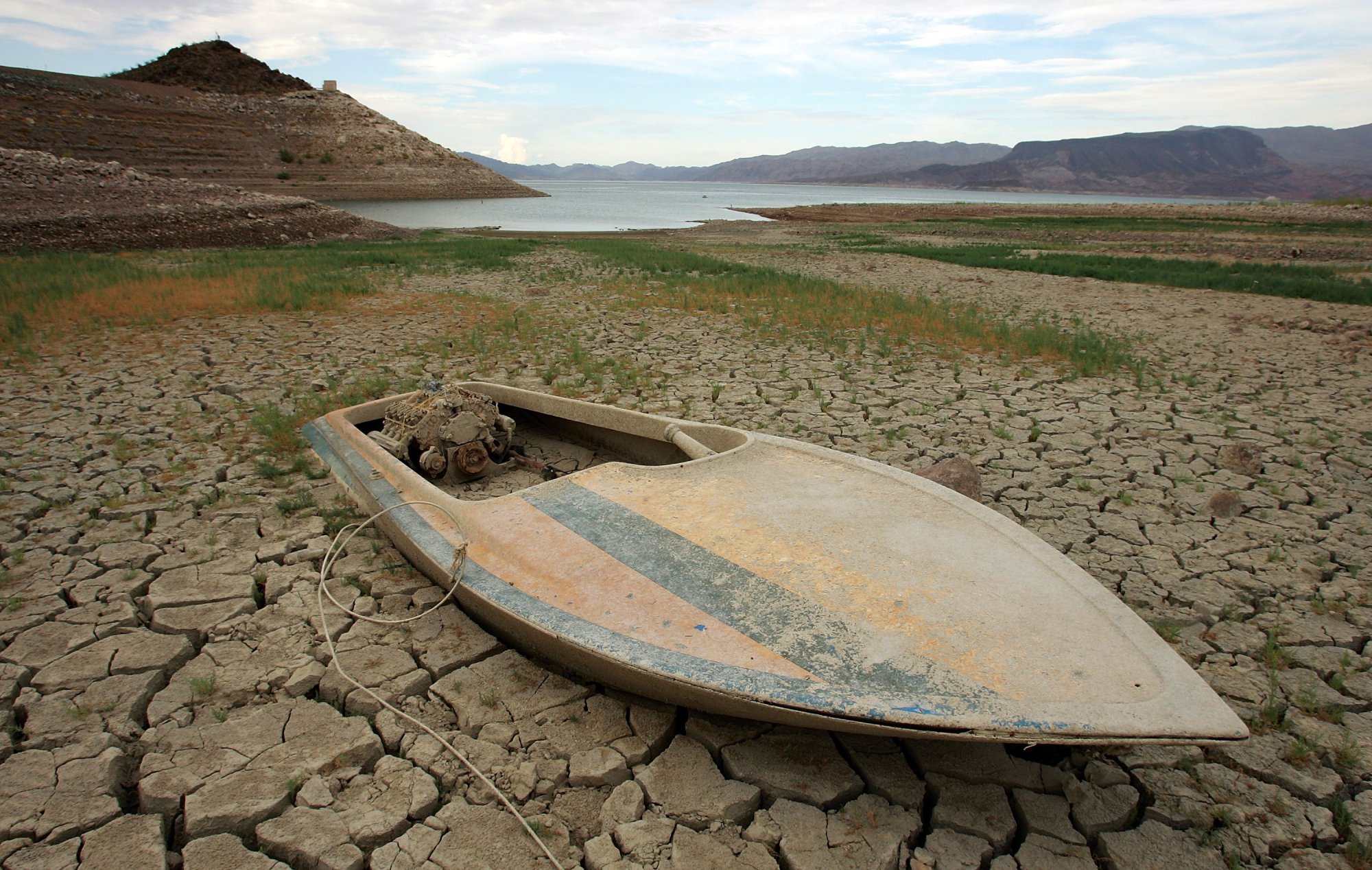
A NASA scientist recently said that California only has one year of water left. What happens if California runs out of water, and how does it affect the world?
(CNN)There is no precedent in contemporary weather records for the kinds of droughts the country's West will face, if greenhouse gas emissions stay on course, a NASA study said.
No precedent even in the past 1,000 years.
The feared droughts would cover most of the western half of the United States -- the Central Plains and the Southwest.
Those regions have suffered severe drought in recent years. But it doesn't compare in the slightest to the 'megadroughts' likely to hit them before the century is over due to global warming.
These will be epochal, worthy of a chapter in Earth's natural history.
Even if emissions drop moderately, droughts in those regions will get much worse than they are now, NASA said.
The space agency's study conjures visions of the sun scorching cracked earth that is baked dry of moisture for feet below the surface, across vast landscapes, for decades. Great lake reservoirs could dwindle to ponds, leaving cities to ration water to residents who haven't fled east.
"Our projections for what we are seeing is that, with climate change, many of these types of droughts will likely last for 20, 30, even 40 years," said NASA climate scientist Ben Cook.
The Dust Bowl
That's worse and longer than the historic Dust Bowl of the 1930s, when "black blizzards" -- towering, blustery dust walls -- buried Southern Plains homes, buggies and barns in dirt dunes.
 The Dust Bowl drought in the 1930s: Dust blows up dunes at Oklahoma farm.
It lasted about 10 years. Though long, it was within the framework of a contemporary natural drought.
To find something almost as extreme as what looms, one must go back to Medieval times.
Nestled in the shade of Southwestern mountain rock, earthen Ancestral Pueblo housing offers a foreshadowing. The tight, lively villages emptied out in the 13th century's Great Drought that lasted more than 30 years.
No water. No crops. Starvation drove populations out to the east and south.
Much, much worse
If NASA's worst case scenario plays out, what's to come could be worse.
Its computations are based on greenhouse gas emissions continuing on their current course. And they produce an 80% chance of at least one drought that could last for decades.
One "even exceeding the duration of the long term intense 'megadroughts' that characterized the really arid time period known as the Medieval Climate Anomaly," Cook said.
That was a period of heightened global temperatures that lasted from about 1100 to 1300 -- when those Ancestral Pueblos dispersed. Global average temperatures are already higher now than they were then, the study said.
Massive data calculation
The NASA team's study was very data heavy.
It examined past wet and dry periods using tree rings going back 1,000 years and compared them with soil moisture from 17 climate models, NASA said in the study published in Science Advances.
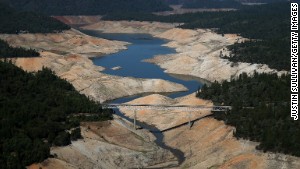 As the severe drought in California continues for a third straight year, water levels in the State's lakes and reservoirs is reaching historic lows.
Scientists used super computers to calculate the models forward along the lines of human induced global warming scenarios. The models all showed a much drier planet.
https://twitter.com/NASAGISS/status/566269496177221632/photo/1
Superhuman challenge
Some Southwestern areas that are currently drought-stricken are filling up with more people, creating more demand for water while reservoirs are already strained.
The predicted megadroughts will wrack water supplies much harder, NASA Goddard Space Flight Center said.
"These droughts really represent events that nobody in the history of the United States has ever had to deal with," Cook said.
Compared with the last millennium, the dryness will be unprecedented. Adapting to it will be tough.
Watch whole playlists of videos on CNN about the world wide drought here... http://www.cnn.com/2015/02/14/us/nasa-study-western-megadrought/index.html
-
About the Ocean's "Methane Bomb" Climate Tipping Point or HOW MUCH SHOULD YOU WORRY ABOUT AN ARCTIC METHANE BOMB?
 Methane hydrate, taken from the ocean floor off the coast of Oregon Wikimedia Commons
Recent warnings that this greenhouse gas could cost us $60 trillion have received widespread publicity. But many scientists are skeptical.
It was a stunning figure: $60 trillion.
Such could be the cost, according to a recent commentary in the journal Nature, of "the release of methane from thawing permafrost beneath the East Siberian Sea, off northern Russia…a figure comparable to the size of the world economy in 2012." More specifically, the paper described a scenario in which rapid Arctic warming and sea ice retreat lead to a pulse of undersea methane being released into the atmosphere. How much methane? The paper modeled a release of 50 gigatons of this hard-hitting greenhouse gas (a gigaton is equal to a billion metric tons) between 2015 and 2025. This, in turn, would trigger still more warming and gargantuan damage and adaptation costs.
The $60 trillion figure went everywhere, and no wonder. It's jaw dropping. To provide some perspective, 50 gigatons is 10 times as much methane as currently exists in the atmosphere. Atmospheric methane levels have more than doubled since the industrial revolution, but this would amount to a much sharper increase in a dramatically shorter time frame.
According to the Nature commentary, that methane "is likely to be emitted as the seabed warms, either steadily over 50 years or suddenly." Such are the scientific assumptions behind the paper's economic analysis. But are those assumptions realistic—and could that much methane really be released suddenly from the Arctic?
A number of prominent scientists and methane experts interviewed for this article voiced strong skepticism about the Nature paper. "The scenario they used is so unlikely as to be completely pointless talking about," says Gavin Schmidt, a noted climate researcher at the NASA Goddard Institute for Space Studies in New York.
Schmidt is hardly the only skeptic. "I don't have any problem with 50 gigatons, but they've got the time scale all wrong," adds David Archer, a geoscientist and expert on methane at the University of Chicago. "I would envision something like that coming out, you know, over the centuries."
Still, the Nature paper is the most prominent airing yet of concerns that a climate catastrophe could be brought on by the release of Arctic methane that is currently frozen in subsea deposits—concerns that seem to be mounting in lockstep with the dramatic warming of the Arctic. That's why it's important to put these fears into context and try to determine just how much weight they ought to be accorded.
Methane on Ice
Let's start with some basics on methane—CH4—a greenhouse gas that reaches the atmosphere from sources as diverse as wetlands, gas drilling, and cow burps. Compared with carbon dioxide, methane is kind of like the boxer who punches himself out in the early rounds, whereas carbon dioxide goes the distance and wins by TKO. Pound for pound, methane causes some 25 times as much global warming as carbon dioxide does. But it only remains in the atmosphere for about nine years, on average, before chemical processes break it down. Carbon dioxide, in contrast, has a far longer atmospheric residence time.
What this means is that methane is most worrisome if a lot of it gets into the atmosphere over a relatively short time period—precisely the scenario contemplated by the Nature paper. So could that happen?
The answer depends on a complicated and uncertainty-laden issue—the stability of frozen deposits of subsea methane in the Arctic region. Frankly, it's hard to imagine something harder to study: We're talking about deposits residing not only beneath one of the world's most remote and inaccessible oceans, but also beneath the sea floor itself.
Much of the world's methane is concentrated in the form of so-called gas "hydrates," icelike solids that form from methane and water at cold temperatures and high pressures, e.g., deep beneath the ocean floor. According to the US Geological Survey, the total global carbon content of such methane hydrates is estimated to equal some 1,800 gigatons (to be sure, there is considerable uncertainty about this estimate).
 Cross-section showing the location of methane hydrates, which are most vulnerable to dissolution in regions 2 and 3. Credit: US Geological Survey.
One thousand eight hundred gigatons would create a climate catastrophe if it were all to be suddenly released, but the vast majority of subsea methane is under deep water, and quite stable. Only a relatively small fraction of global methane hydrates are at issue in the Nature paper, and this methane is in a very peculiar situation: It is frozen in the subsea permafrost of relatively shallow continental shelves in the Arctic region. This frozen sediment was once coastline, but was submerged as oceans rose following the last Ice Age. And now, it is being bathed in warmer waters due to the warming of the Arctic.
So how much should we worry that these particular methane hydrates might melt, releasing gas that would then travel through both sediment and seawater to reach the atmosphere? That's where the scientific debate begins—over both how much methane falls into this category, and how vulnerable it is to the warming that is now gripping the Arctic region.
Peering Beneath the East Siberian Sea
The methane disaster concerns gained major prominence with a 2010 paper in Science by University of Alaska-Fairbanks researcher Natalia Shakhova and her colleagues, who examined methane emissions in a very remote area of the Arctic, the East Siberian Sea north of Russia. The continental shelf underlying this ocean is more than 2 million square kilometers in size, and its subsea permafrost lies only about 50 meters below the sea surface. Traveling to the remote region in Russian ice-breakers, Shakhova's team sampled water content and air content at the sea surface repeatedly, over a series of years. They found high concentrations of methane in the water—"50% of surface waters are supersaturated with methane," the paper reported—and some of the gas was also venting from the water into the atmosphere.
 The East Siberian Sea. Wikimedia Commons
Although the Science paper did not contain the figure, it seems clear that Shakhova is the source for the idea that a 50-gigaton release of methane could occur in a short time frame. Or as she put it in a 2008 abstract, "[W]e consider release of up to 50 Gt of predicted amount of hydrate storage as highly possible for abrupt release at any time," adding that this could lead to "catastrophic greenhouse warming." The Nature paper cited another 2010 paper by Shakhova and her colleagues in the journal Doklady Earth Sciences, which uses the 50 gigaton figure in discussing possible methane emission scenarios.
Shakhova did not respond to several requests for comment for this article; her automatic email response said she out doing fieldwork. But Peter Wadhams, the Cambridge physicist who is a coauthor of the Nature paper, said that his work relied on that of Shakhova and her team because "they’ve done the most work there, working there every year, doing field observations…we would rather base it on the estimates of the people actually working there, rather than the people who aren’t working there." Here is a video of Shakhova discussing her research:
The trouble is that at this point, many other scientists don't accept that work—or rather, don't agree about its implications. None seem to dispute the actual measurements taken by Shakhova and her team, but as soon as the Science paper came out, a group of researchers questioned the idea that there was any cause for alarm. "A newly discovered [methane] source is not necessarily a changing source, much less a source that is changing in response to Arctic warming," they wrote. The implication is that perhaps methane has always been in the water at such levels, without methane hydrates having been disturbed—rather, the methane may be from another source. According to one 2011 study, for instance, the observed methane probably came not from hydrates, but simply from "the permafrost's still adjusting to its new aquatic conditions, even after 8,000 years." The hydrates, in contrast, are thought to be much deeper below the sea surface, due to basic physical constraints on their formation and stability. According to the US Geological Survey, "in permafrost areas, methane hydrate is not stable until about 225 m depth."
Indeed, according to Ed Dlugokencky, who monitors global atmospheric methane levels at the National Oceanic and Atmospheric Administration (NOAA), "so far, there has not been a significant increase in methane emissions in the Arctic." In other words, if methane is really starting to vent into the air in large quantities, Dlugokencky says he isn't seeing it.
 A view of the East Siberian Sea Wikimedia Commons
A Debate Over Hydrate Depth
And that's just the first reason that many scientists are skeptical. According to Carolyn Ruppel, who heads the Gas Hydrates Project at the US Geological Survey, there just isn't that much vulnerable methane in submerged permafrost to begin with. "We think very little hydrate on this planet is associated with permafrost, either subsea or terrestrial," she says. Inspired in part by the Shakhova research, the USGS undertook to study the continental shelves of the Beaufort Sea, off Alaska and Canada. "We set out to test this idea that all of the Arctic shelves were going to have high methane emissions," she says. "And at least for the US Beaufort shelf, we're not seeing them."
Ruppel acknowledges that due to Arctic warming, more methane is going to be released, much of it from permafrost on land. But, she continues, "I would say one of the least likely sources is methane gas hydrates. You are limited by the laws of physics," she adds—noting that the beginning of the zone of stability for these hydrates is some 220 meters deep. That's a recurrent refrain among skeptics—they say hydrates just can't form above a certain depth, and warming can't penetrate such a depth very quickly. "You've got to go from the sea floor of 50 meters depth, down to 200 meters where the hydrate is," explains the University of Chicago's David Archer. "So that just takes a long time."
Moreover, even if subsea permafrost methane hydrates do thaw, the liberated gas still has to travel through layers of sediment just to get to the ocean floor. So how does that happen? "That's kind of mysterious," says Archer. Perhaps there will be open pathways for gas in some places, but perhaps there won't. Archer also notes that there have been undersea explosions or landslides that release methane in bursts, but "those kinds of things seem like they would be relatively small compared to 50 gigatons, and they would happen sporadically in time over centuries, not everything blows up in a few years."
Nonetheless, imagine that methane gas from melted hydrate makes it to the sea floor. It now exists as bubbles with, say, 50 meters to go before they reach the sea surface. Most of the bubbles won't make it, say scientists: They'll be dissolved in seawater, and then the methane will be broken down by microorganisms over a period of months. "If methane is in the ocean water column, most of it doesn't get out," explains Bill Reeburgh, a professor of earth system science at the University of California-Irvine who has spent his career studying methane. "Most of it is oxidized" by bacteria, which turn it into carbon dioxide and water, Reeburgh continues. "So all these stories about seeps, people seem to think the bubbles go straight to the atmosphere, and they don't."
In other words, while the waters of the East Siberian Sea may be full of dissolved methane, for many scientists that doesn't prove that hydrates have been disturbed, or that the Arctic is starting to vent large amounts of methane from below the sea floor into the atmosphere. Not yet, anyway.
Nonetheless, Cambridge's Peter Wadhams takes a different view. Of the critics, he says that "it comes to not believing that these scientists who are actually working there know what they’re talking about, which I would say is kind of insulting to them." Wadhams also says that there is a new mechanism for methane hydrate release that the critics aren't considering. The retreat of Arctic sea ice, he suggests, is allowing very intense warming of the waters above continental shelves. He adds that there are certain hydrates "detectable at 20 meters" below the sea floor, far shallower than normal. Wadhams calls these hydrates "Ice Age relics" that formed under very different conditions. Shakhova, too, has referred in the past to hydrates occurring at 20 meters depth, saying they have been "sampled in Siberia."
Other scientists remain skeptical. David Archer says his simulations "never see hydrate stability" above 250 meters.
So Should You Worry?
What is clear about this story, then, is that one group of scientists has articulated a set of concerns that a number of others just do not accept at this point. And no doubt this problem is exacerbated by the realities of methane hydrate research—it is extremely difficult (and costly) to take a scientific expedition to the East Siberian Sea, or for that matter, to conduct Arctic research in general. In this case, it appears that one research team, the one actually working in this area, has developed views distant from those of many other researchers.
So what should you do—and what should you think? Bear in mind that there are many good reasons to be skeptical of a methane disaster—it is hardly a matter of scientific consensus that this is a real concern. And that stands in stark contrast to the issue of climate change in general, an issue on which scientists are overwhelmingly aligned (and where the solution remains incredibly obvious: cutting carbon emissions).
As global warming proceeds, it is also important to step back and acknowledge that with the unprecedented warming of the Arctic, it would be surprising if there weren't surprises. When we bring on warming this fast, we risk unpredictable consequences, whether with regard to methane or something else.
"It's weird for me to be saying, 'Oh, it could never happen.' It's always the wrong side of things when you're talking about nature," says David Archer of the Arctic methane catastrophe scenario. "But," he adds, "nobody's come up with a defendable way of it happening all at once."
—Chris Mooney, August 8, 2013
source: http://m.motherjones.com/m